
Interaction between Heart and Movement: Gait Analysis with Single IMU
Overview
The human body functions through complex synergies between systems. A critical but often overlooked interaction exists between the locomotor system (muscles used for movement) and the cardiac system (heart function). Research suggests that synchronizing gait with the cardiac cycle—specifically “Diastolic Stepping”—can alter heart rate response and improve blood flow efficiency.
This project aims to quantify this interaction by developing a robust gait analysis framework using a single chest-mounted Inertial Measurement Unit (IMU). By correlating gait phases with cardiac cycles, we can explore how the “skeletal muscle pump” assists the “cardiac pump” during exercise.

Fig 1: The physiological concept of the skeletal muscle pump working in synergy with the cardiac pump to aid blood flow.
Theoretical Background
The study focuses on the timing of foot strikes relative to the cardiac cycle:
- Diastolic Stepping: Occurs when the foot strike happens during the heart’s relaxation phase (diastole). This is hypothesized to aid venous return.
- Systolic Stepping: Occurs when the foot strike coincides with the heart’s contraction phase (systole).
By analyzing the Step Rate (SR) to Heart Rate (HR) ratio, we can determine if a coupling exists ($SR/HR \approx 1$).
System Design & Methodology
Unlike traditional gait analysis that uses multi-node sensor networks or optical motion capture, this system utilizes a single off-the-shelf IMU (Movesense) attached to the chest. This configuration minimizes intrusiveness while allowing for the capture of both gross body movement and physiological vibrations.
1. Hardware Setup
- Sensor: Movesense 6-axis IMU (Accelerometer + Gyroscope).
- Placement: Sternum (Chest), fixed with elastic straps.
- Data Acquisition: Raw acceleration ($m/s^2$) and angular velocity ($deg/s$) are recorded and synchronized for post-processing.
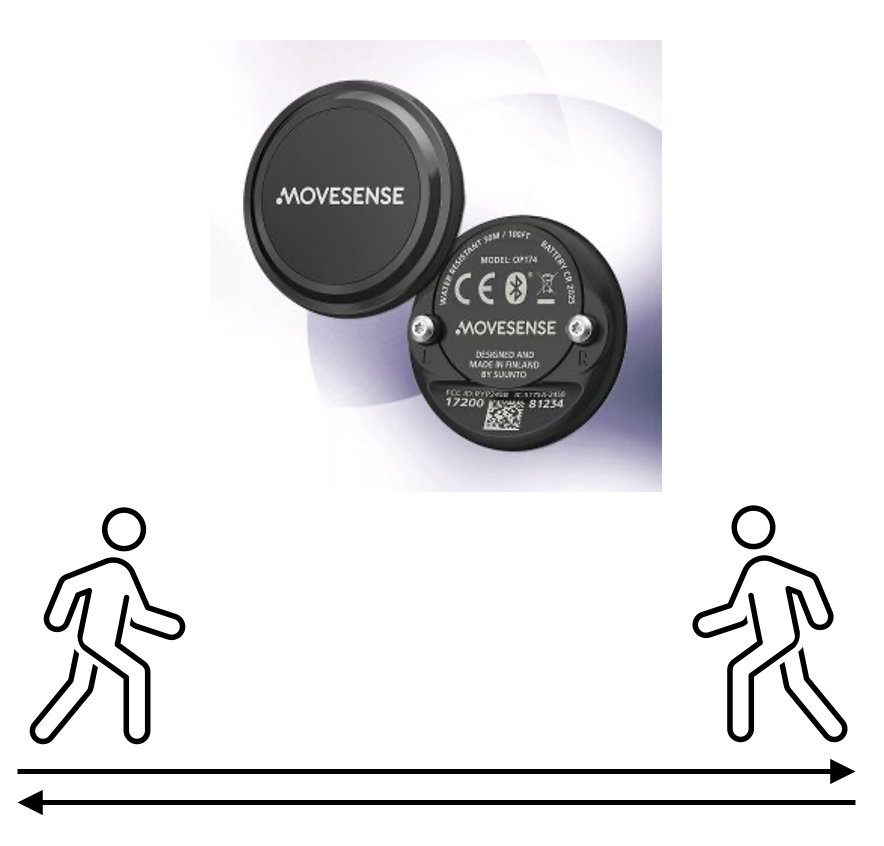
Single-IMU Chest Placement
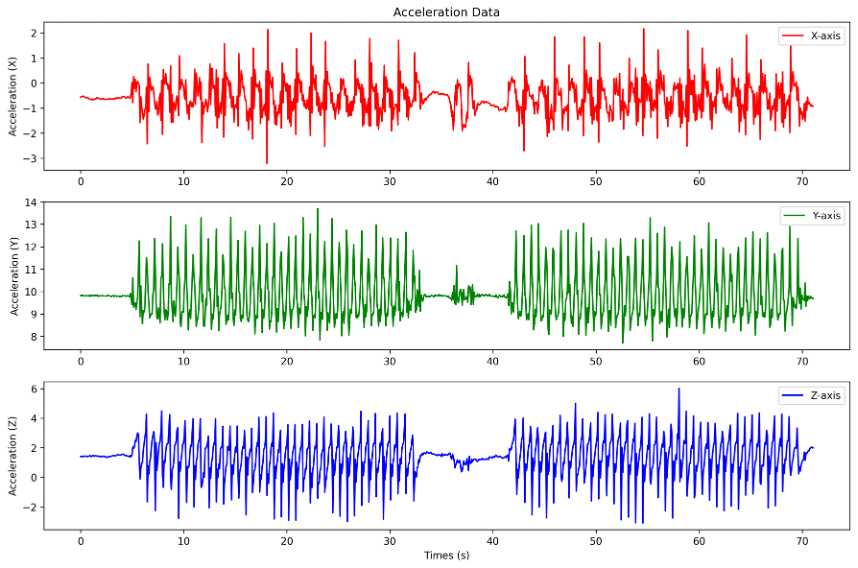
Raw Accelerometer & Gyroscope Data
2. Algorithm Design
The core challenge is extracting precise orientation and gait events from a noisy chest-mounted sensor.
- Orientation Estimation: We implement sensor fusion algorithms to process raw acceleration and gyroscope data, estimating the 3D orientation of the torso.
- Parameter Extraction: By analyzing the vertical acceleration peaks and trunk rotation, the system detects Heel Strikes (HS) and calculates step cadence.
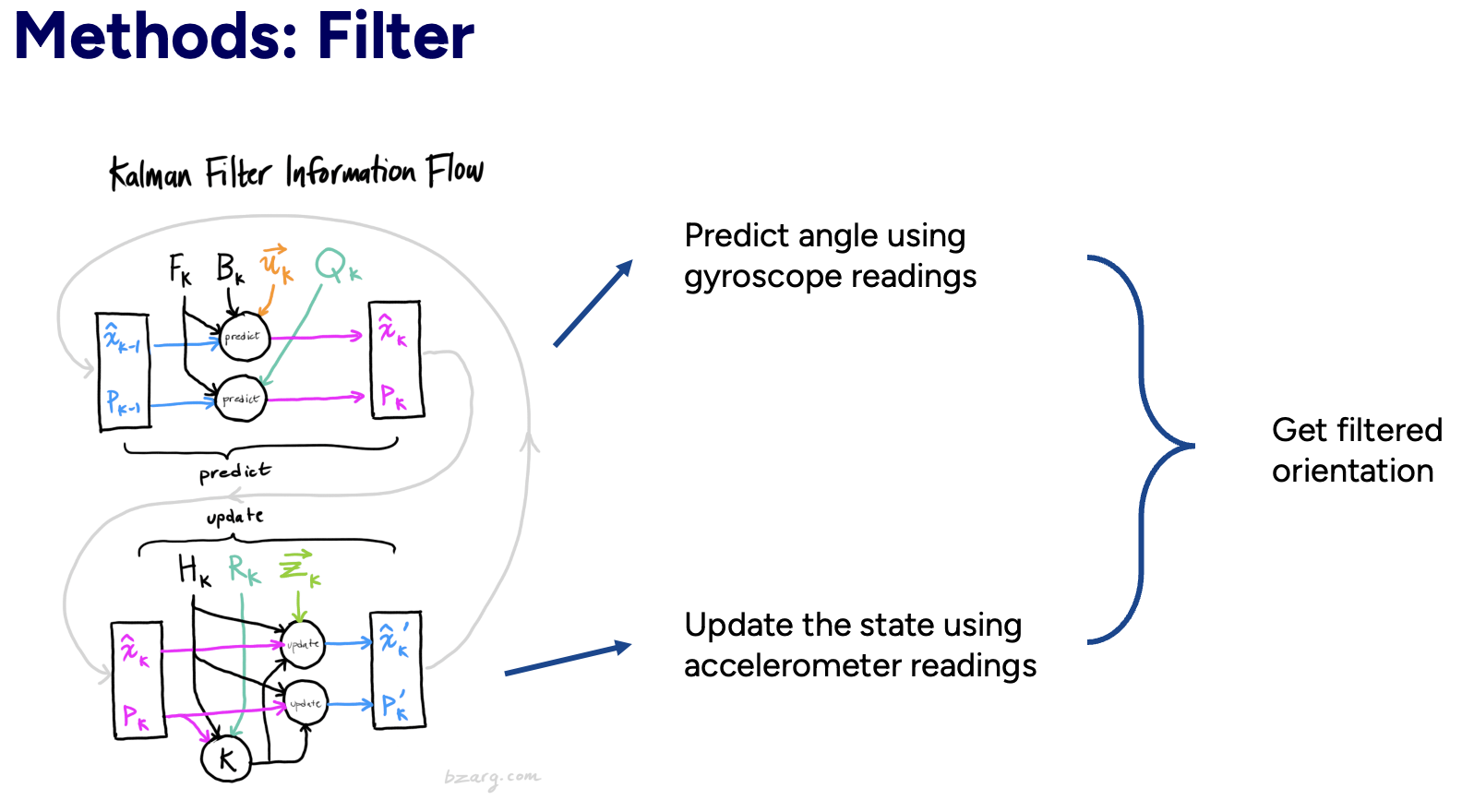
Fig 3: Filter design.
Experimental Workflow
Experiments were conducted in a corridor environment involving natural walking tasks.
- Subject Preparation: The subject wears the chest strap with the IMU.
- Protocol: The subject walks back and forth at a normal speed.
- Analysis: The data is processed to visualize the gait cycle and overlay it with cardiac timing (derived from heart rate monitoring).
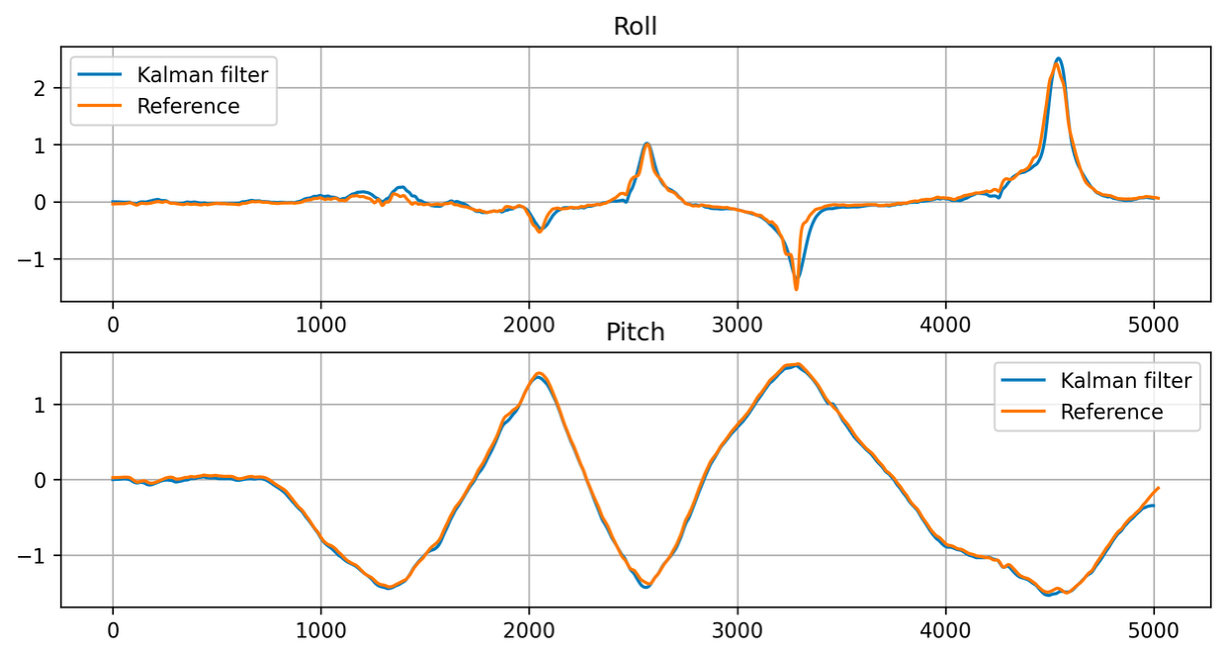
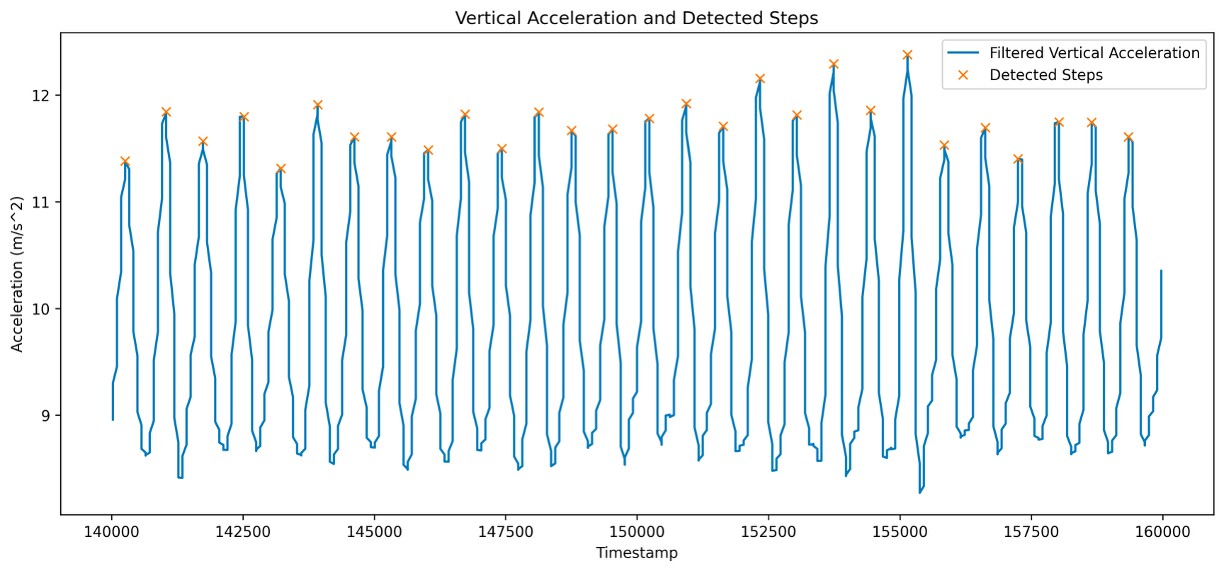
Fig 4: Results.
Demo Video
Future Directions
This framework establishes the baseline for “Heart-Gait” interaction studies. Future work involves:
- Integrating ECG data to precisely timestamp R-peaks relative to heel strikes.
- Testing biofeedback mechanisms to encourage “Diastolic Stepping” for improved athletic performance or cardiac rehabilitation.